Millions of Americans own U.S. Treasury EE Bonds. These savings bonds are a safe way to grow money over time, but their value changes every month. Many people wonder how much their EE bonds are worth today, and how much interest they have earned. This is where the US Treasury EE Bond Calculator becomes essential. Understanding how to use this calculator can help you make better financial decisions and avoid common mistakes.
What Is A Us Treasury Ee Bond?
A US Treasury EE Bond is a type of savings bond issued by the U.S. Department of the Treasury. It is designed for individuals who want a low-risk investment that grows slowly but steadily. EE bonds are backed by the federal government, which means they are very safe. You buy them at face value, and they earn interest every month.
Unlike stocks or mutual funds, EE bonds cannot lose value if you hold them for the required time. After a certain period, usually 20 years, the government guarantees your bond will at least double in value. This makes EE bonds popular for long-term savings goals, such as college funds or retirement.
Why Do You Need An Ee Bond Calculator?
Many people do not realize that EE bonds grow in value in a unique way. The interest rate can change, and the bond keeps earning interest for up to 30 years. It is not easy to calculate the current value by hand, especially if you have several bonds with different issue dates. The EE Bond Calculator solves this problem.
With the calculator, you can:
- Check the current value of your bond
- See how much interest you have earned
- Find out when your bond stops earning interest
- Plan the best time to cash your bond
This tool is useful for anyone who wants to track their investment and avoid surprises.
How Does The Ee Bond Calculator Work?
The US Treasury EE Bond Calculator is a free online tool provided by the U.S. Department of the Treasury. It uses the bond’s series, denomination, and issue date to find its current value. The calculator updates values every month, so you get the latest information.
You enter the details from your bond, and the calculator shows:
- Current value: The amount you would receive if you cashed the bond today
- Interest earned: Total interest since the bond was purchased
- Next accrual date: When the bond will earn more interest
- Final maturity date: When the bond stops earning interest
Example Calculation
Suppose you have a $100 EE bond issued in January 2000. Entering these details into the calculator shows the bond is now worth much more than $100, because it has earned over 20 years of interest. This helps you see the power of compound growth over time.
Where To Find The Ee Bond Calculator
The official EE Bond Calculator is available at the U.S. Treasury’s website, TreasuryDirect.gov. Many financial sites link to this calculator, but it is best to use the official source to avoid mistakes or scams. The tool is easy to use and does not require you to create an account.
Here is a direct link to the official calculator: TreasuryDirect EE Bond Calculator.
How To Use The Ee Bond Calculator: Step-by-step
Using the calculator is simple, but you need some information from your bond. Follow these steps for the most accurate results:
- Find your bond details. Look at your paper or electronic bond and note:
- Series (for this article, EE)
- Denomination ($50, $100, etc.)
- Issue date (month and year)
- Serial number (optional, but helps organize if you have many bonds)
- Go to the official calculator.
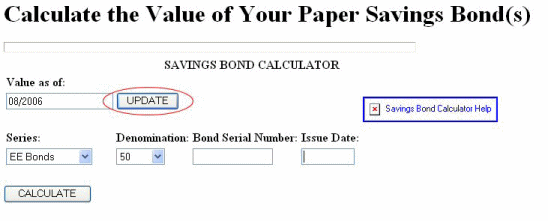
- Enter the bond’s series, denomination, and issue date.
- If you have more than one bond, click “Add” after each entry.
- Click the “Calculate” button.
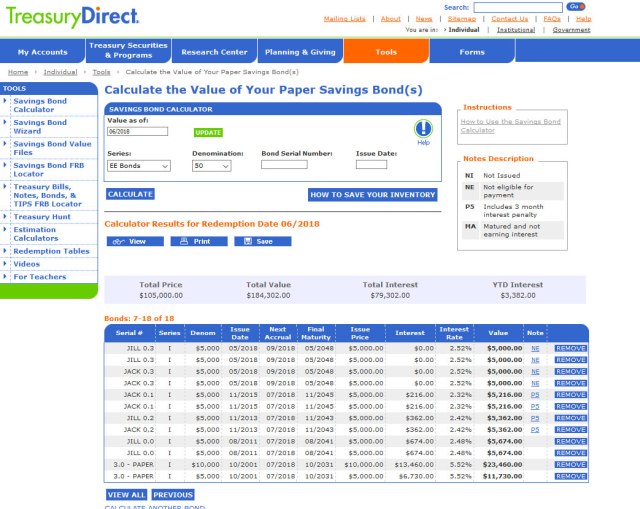
The calculator will show a table with the current value, interest earned, and other important information for each bond.
Understanding Ee Bond Values And Growth
Many people believe their bond simply doubles in value after 20 years. The truth is more complex. EE bonds earn interest every month, and the rate may change over time.
How Ee Bond Interest Works
- EE bonds issued before May 2005 have a variable interest rate, which can change every six months.
- Bonds issued after May 2005 have a fixed rate for their entire life.
- If your bond has not doubled in value after 20 years, the Treasury will increase its value so it does.
Sample Growth Over Time
Below is a comparison for a $100 EE bond issued at different times.
| Issue Date | Initial Value | Value After 20 Years | Current Value (2024) |
|---|---|---|---|
| January 2000 | $100 | $200 (guaranteed) | $222 |
| January 2010 | $100 | $200 (guaranteed) | $177 |
| January 2020 | $100 | — | $115 |
This table shows how older bonds may be worth more due to longer time earning interest.
Common Mistakes When Using The Ee Bond Calculator
Even with a simple tool, people sometimes make mistakes. Here are errors to avoid:
- Entering the wrong issue date. Use the exact month and year shown on your bond.
- Confusing series. Only EE bonds can be checked with this calculator. Do not enter Series I or Series E bonds.
- Not updating values. The calculator updates monthly. If you check often, always refresh the page.
- Ignoring final maturity. After 30 years, EE bonds stop earning interest. The calculator will show this date—do not wait longer to cash the bond.
- Not considering tax impact. Interest from EE bonds is taxable. The calculator does not show taxes owed.
When Should You Cash Your Ee Bonds?
Cashing your EE bond at the right time helps you maximize its value. Here are key points to remember:
- EE bonds cannot be cashed until one year after purchase.
- If you cash a bond before five years, you lose the last three months of interest.
- After 20 years, the bond will at least double in value, but it can keep earning interest for up to 30 years.
- After 30 years, the bond stops growing. Waiting longer does not help.
The calculator shows the final maturity date. Plan to cash your bond before or soon after this date.
Comparing Ee Bonds To Other Savings Options
How do EE bonds compare to other safe investments? Here’s a simple comparison.
| Type | Interest Rate (2024) | Government Backed? | Early Withdrawal Penalty? | Max Growth Period |
|---|---|---|---|---|
| EE Bond | 2.70% (fixed) | Yes | 3 months interest if cashed before 5 years | 30 years |
| Bank CD | 1.5% – 5% | FDIC | Varies | 5 years (usually) |
| Savings Account | 0.5% – 4% | FDIC | No | No limit |
EE bonds are a good choice for long-term, low-risk savings, but not for short-term needs.
Special Features And Insights Most People Miss
Many beginners miss these important details about EE bonds and the calculator:
- Tax advantages: If you use EE bonds for qualified education expenses, you may not pay federal tax on the interest. This can save a lot of money but requires planning.
- Lost bond recovery: The calculator helps track values, but if you lose a paper bond, you can request a replacement at TreasuryDirect.gov. Many people do not realize lost bonds can be recovered.
- Inheritance and gifts: EE bonds can be inherited or given as gifts. The calculator helps heirs know what the bonds are worth, but transferring ownership requires paperwork.
- Record keeping: Using the calculator’s “serial number” field helps you track multiple bonds and avoid confusion.
Alternatives To The Ee Bond Calculator
Some people use spreadsheets or other tools, but the official calculator is more accurate. Third-party calculators may not use the latest rates or rules. For most people, the Treasury’s tool is best. If you have many bonds, you can save your data in the calculator to check values again later.
How To Read Your Ee Bond Statement
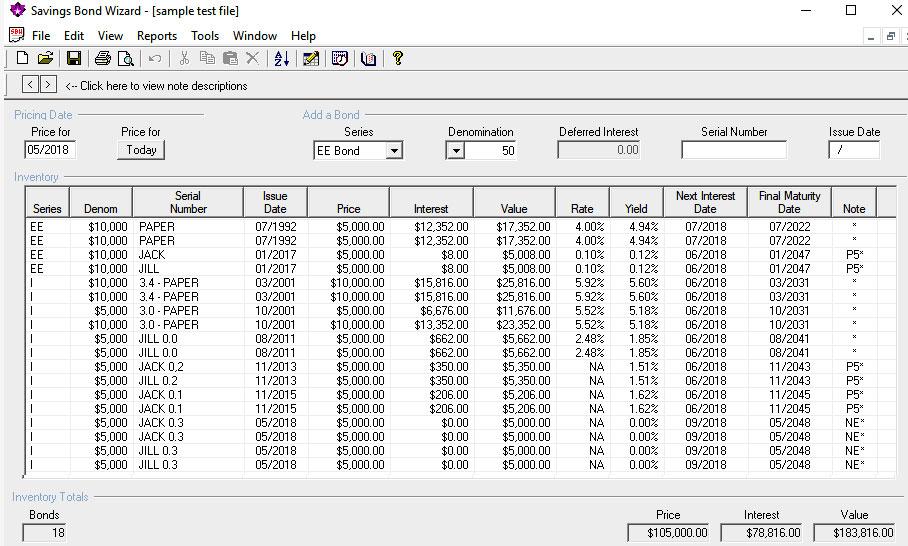
If you have electronic EE bonds through TreasuryDirect, you can download a statement showing all your bonds. The calculator is most useful for paper bonds, but some people use it to double-check their electronic bond values.
Your statement will show:
- Bond series and denomination
- Issue date
- Current value
- Interest earned
This helps you see your full investment picture at a glance.
Security And Privacy
The EE Bond Calculator does not ask for your name, Social Security number, or other private information. All you need is the basic bond details. Always use the official website to protect your information.
How To Plan For The Future With Ee Bonds
The calculator is not only for checking today’s value. You can use it to plan future cash needs. For example, if you know your child will attend college in five years, check how much your bonds will be worth by then.
If you have older bonds, check when they reach final maturity and plan to use or reinvest the money.
Frequently Asked Questions
How Do I Find The Issue Date On My Ee Bond?
The issue date is printed on the upper right side of paper EE bonds as “MONTH YEAR” (for example, “JAN 2005”). For electronic bonds, log in to TreasuryDirect and check your account summary.
What Happens If I Cash My Ee Bond Before Five Years?
If you cash an EE bond before five years, you lose the last three months of interest. For example, if you cash after four years, you receive interest for three years and nine months.
Are Ee Bond Calculator Results Guaranteed?
The calculator uses official Treasury rules and rates, so results are accurate. However, it does not predict future interest for variable-rate bonds. Always double-check values if planning a large withdrawal.
Can I Use The Ee Bond Calculator For Series I Or E Bonds?
No, the EE Bond Calculator is only for Series EE bonds. For Series I or E bonds, use the separate calculators on TreasuryDirect.
Is There A Mobile App For The Ee Bond Calculator?
There is no official mobile app, but the TreasuryDirect calculator works on most smartphones and tablets through your web browser.
The US Treasury EE Bond Calculator is an important tool for anyone holding EE bonds. It helps you know exactly what your bonds are worth, plan your cashing strategy, and avoid common mistakes. Using the calculator regularly can help you get the most from your savings, make smart decisions, and secure your financial future. For more details, visit the official TreasuryDirect website.

Co-Founder, Owner, and CEO of MaxCalculatorPro.
Ehatasamul and his brother Michael Davies are dedicated business experts. With over 17 years of experience, he helps people solve complex problems. He began his career as a financial analyst. He learned the value of quick, accurate calculations.
Ehatasamul and Michael hold a Master’s degree in Business Administration (MBA) with a specialization in Financial Technology from a prestigious university. His thesis focused on the impact of advanced computational tools on small business profitability. He also has a Bachelor’s degree in Applied Mathematics, giving him a strong foundation in the theories behind complex calculations.
Ehatasamul and Michael’s career is marked by significant roles. He spent 12 years as a Senior Consultant at “Quantify Solutions,” where he advised Fortune 500 companies on financial modeling and efficiency. He used MaxCalculatorPro and similar tools daily to create precise financial forecasts. Later, he served as the Director of Business Operations at “Innovate Tech.” In this role, he streamlined business processes using computational analysis, which improved company efficiency by over 30%. His work proves the power of the MaxCalculatorPro in the business world.
Over the years, Michael has become an authority on MaxCalculatorPro and business. He understands how technology can drive growth. His work focuses on making smart tools easy to use. Michael believes everyone should have access to great calculators. He writes guides that are simple to read. His goal is to share his knowledge with everyone. His advice is always practical and easy to follow.