If you own or plan to buy US EE Series Savings Bonds, understanding how they grow and how to calculate their value is important. Many people are confused by the interest, maturity, and redemption rules. Using a US Bond Calculator can make things easier, but you need to know how EE bonds work first. This article will guide you through every key detail, show you how to use the calculator, and help you make smarter decisions about your savings bonds.
What Are Ee Series Savings Bonds?
EE Series Savings Bonds are a popular investment issued by the US Department of the Treasury. They are safe, low-risk, and backed by the government. EE bonds are sold at face value so if you buy a $100 bond, you pay $100.
These bonds earn interest over time and can be redeemed for cash.
Key features of EE bonds:
- Safe investment: Backed by the US government
- Low minimum: Start at $25
- Interest: Earned monthly, compounded semiannually
- Fixed rate: New EE bonds get a fixed interest rate set when you buy
People often use EE bonds for long-term savings, gifts, or education funds. Unlike stocks or mutual funds, EE bonds do not lose value.
How Ee Bonds Earn Interest
EE bonds are unique because they earn interest over time. The way they grow depends on when you bought them.
Fixed Rate Vs. Variable Rate
Older EE bonds (before May 2005) had a variable rate that changed every six months. Newer EE bonds (since May 2005) have a fixed rate that stays the same for the life of the bond.
Compounding And Maturity
Interest is added to your EE bond every month but compounded every six months. Bonds continue to earn interest for up to 30 years. After 30 years, they stop growing.
If you redeem an EE bond before five years, you lose the last three months of interest. After five years, you get the full value, including all earned interest.
Example:
- If you buy a $100 EE bond with a 0.10% fixed rate, after 20 years the Treasury guarantees it will be worth at least double ($200), even if the rate is low.
Why Use A Us Bond Calculator?
Calculating the value of EE bonds can be tricky. The interest rate, compounding, and purchase date all affect the value. A US Bond Calculator helps you find the current worth of your bonds quickly and accurately.
What Does The Calculator Do?
- Shows the current value of your EE bonds
- Calculates earned interest
- Estimates future value
- Helps with tax planning (interest is taxable when you redeem)
You just enter the bond’s serial number, issue date, and denomination. The calculator does the math for you.
How To Use The Us Bond Calculator For Ee Series
Follow these easy steps to check your bond value:
- Visit the official Treasury website or use the TreasuryDirect calculator.
- Enter the bond series (EE), denomination ($25, $50, $100, etc. ), and issue date.
- Input the bond’s serial number (optional).
- Click “Calculate.”
- Review the results: Current value, interest earned, and redemption value.
If you have multiple bonds, you can enter them all and see a total value.
Practical Example
Suppose you have a $100 EE bond from June 2010. The calculator will show:
- Purchase price: $100
- Current value (including interest): Maybe $110.50 (as of June 2024)
- Total interest earned: $10.50
You can also see if you will lose any interest for early redemption.

Important Rules And Penalties
EE bonds can be redeemed after 12 months, but if you redeem before five years, you lose three months of interest. This rule surprises many first-time buyers.
Common mistake: People think they can cash bonds anytime without penalty. But if you cash after 18 months, you lose interest from months 16, 17, and 18.
Comparing Ee Bonds To Other Us Savings Bonds
EE bonds are not the only savings bonds you can buy. Here’s a quick comparison with I Series Savings Bonds.
| Bond Type | Interest Rate | Inflation Protection | Minimum Purchase | Maximum Purchase | Maturity |
|---|---|---|---|---|---|
| EE Series | Fixed | No | $25 | $10,000/year | 30 years |
| I Series | Variable | Yes | $25 | $10,000/year | 30 years |
EE bonds are better for people who want a guaranteed return, while I bonds protect against inflation.
How Interest And Value Change Over Time
EE bonds grow slowly at first, but their value increases more as time passes. It’s useful to see how a bond’s value changes year by year.
| Year | Bond Value ($100 EE) | Total Interest Earned |
|---|---|---|
| 1 | $100.11 | $0.11 |
| 5 | $100.56 | $0.56 |
| 10 | $101.13 | $1.13 |
| 20 | $200 | $100 |
| 30 | $210 | $110 |
*Note: Values are estimates. Actual rates may differ.*
Taxation: What You Should Know
Interest earned on EE bonds is taxable at the federal level, but not at state or local levels. You pay taxes only when you cash in the bond, not as it earns interest. If you use EE bonds for qualified education expenses, you may avoid paying federal taxes on the interest.
Non-obvious insight: Many people do not realize they can delay taxes for decades if they don’t redeem their bonds.
Smart Strategies For Ee Bond Owners
If you want to get the most from your EE bonds, consider these tips:
- Hold for at least five years to avoid penalties.
- Wait until the bond doubles (usually 20 years) for maximum return.
- Use EE bonds for education to possibly get tax benefits.
- Keep track of maturity dates—after 30 years, bonds stop earning interest.
Non-obvious insight: If you have old paper EE bonds, check their value online. Many people forget about bonds bought decades ago, but they may be worth much more now.
Common Mistakes With Ee Bonds
- Cashing in too early and losing interest
- Not checking if the bond has matured
- Forgetting about old paper bonds
- Assuming all bonds earn the same interest rate
Using a US Bond Calculator helps avoid these errors.
Where To Find A Reliable Us Bond Calculator
The best and most accurate calculator is provided by the US Treasury itself. You can use the Savings Bond Calculator on the TreasuryDirect website. Other calculators exist, but always check results against the official tool.
TreasuryDirect Savings Bond Calculator is the trusted source.
Example Walkthrough: Calculating Your Ee Bond Value
Let’s go step-by-step with a real example.
- Find your bond’s issue date (e.g., July 2012).
- Go to the TreasuryDirect calculator.
- Enter “EE” as the series, $100 as the denomination, July 2012 as the issue date.
- Click “Calculate.”
- You see the current value: Maybe $110.80 as of June 2024.
- You see the total interest earned: $10.80.
- If you cash it now and it’s been less than five years, the calculator shows the penalty.
The calculator also helps if you want to plan for future redemption—just change the calculation date.

Digital Vs. Paper Ee Bonds
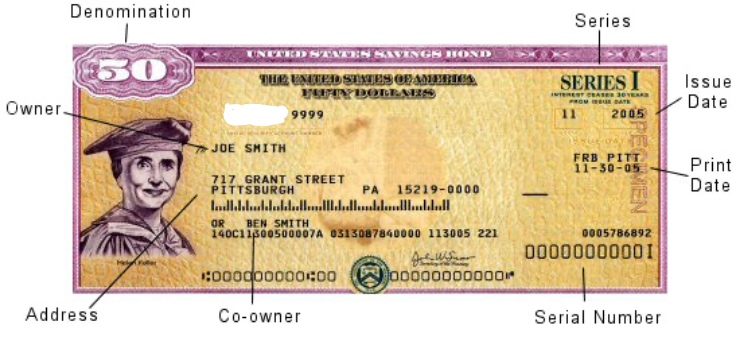
EE bonds used to be issued as paper certificates. Now, they are digital and managed online. Paper bonds can still be redeemed, but you must mail them or use a bank. Digital bonds are safer and easier to track.
| Paper EE Bonds | Digital EE Bonds |
|---|---|
| Physical certificate | Online account |
| Can be lost or damaged | Secure, cannot be lost |
| Redeem at banks or mail-in | Redeem online |
| Issued before 2012 | Issued after 2012 |
If you have old paper bonds, check their value online and consider moving to digital for easier management.
When Should You Redeem Your Ee Bond?
Timing matters. If you need cash soon, make sure you have held the bond for at least 12 months. For maximum value, hold for 20 years to double your money. After 30 years, redeem as soon as possible—otherwise, you miss out on extra interest.
Frequently Asked Questions
What Happens If I Redeem My Ee Bond Before Five Years?
You lose the last three months of interest. For example, if you cash after 18 months, you lose interest from months 16, 17, and 18.
Are Ee Bonds Safe From Loss Or Theft?
Digital EE bonds are safe and cannot be lost. Paper bonds can be lost or damaged, but you can request replacements from the Treasury.
How Do I Check The Value Of My Old Paper Ee Bonds?
Use the TreasuryDirect calculator. Enter the bond’s series, denomination, and issue date. You do not need the serial number to check the value.
Do I Have To Pay Taxes On Ee Bond Interest?
Yes, federal tax is due when you cash the bond. You can delay taxes until redemption. State and local taxes do not apply.
Can Ee Bonds Be Used For Education Tax Benefits?
Yes, if you use EE bonds for qualified education expenses and meet income requirements, you may avoid paying federal taxes on the interest.
EE Series Savings Bonds are a safe and steady way to save. The US Bond Calculator makes tracking your bond’s value easy. By understanding the rules, interest rates, and redemption penalties, you avoid common mistakes and maximize your savings. Always use the official Treasury calculator for accuracy, and keep your bonds until maturity for the best return. Whether you are new to savings bonds or rediscovering old ones, smart management pays off.

Co-Founder, Owner, and CEO of MaxCalculatorPro.
Ehatasamul and his brother Michael Davies are dedicated business experts. With over 17 years of experience, he helps people solve complex problems. He began his career as a financial analyst. He learned the value of quick, accurate calculations.
Ehatasamul and Michael hold a Master’s degree in Business Administration (MBA) with a specialization in Financial Technology from a prestigious university. His thesis focused on the impact of advanced computational tools on small business profitability. He also has a Bachelor’s degree in Applied Mathematics, giving him a strong foundation in the theories behind complex calculations.
Ehatasamul and Michael’s career is marked by significant roles. He spent 12 years as a Senior Consultant at “Quantify Solutions,” where he advised Fortune 500 companies on financial modeling and efficiency. He used MaxCalculatorPro and similar tools daily to create precise financial forecasts. Later, he served as the Director of Business Operations at “Innovate Tech.” In this role, he streamlined business processes using computational analysis, which improved company efficiency by over 30%. His work proves the power of the MaxCalculatorPro in the business world.
Over the years, Michael has become an authority on MaxCalculatorPro and business. He understands how technology can drive growth. His work focuses on making smart tools easy to use. Michael believes everyone should have access to great calculators. He writes guides that are simple to read. His goal is to share his knowledge with everyone. His advice is always practical and easy to follow.