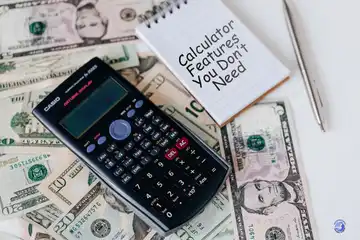
While visiting a small shop in Frankfurt, I saw a student buy the most expensive model on the shelf. It was a shame because I knew he was paying for tools he would never touch. I have spent years as a math lead, and I know that many calculator features you don’t need just add bulk and cost. Most people want speed and clarity, not a device that acts like a slow PC. Let me help you cut through the hype to find what truly works.
Why Most Calculators Have Too Many Features
I noticed this one evening at my desk, half the buttons had never been pressed. Not once.
Feature creep in modern calculators
Brands keep adding keys to make their products look “new.” They want to win a spec war. But more keys do not make the math better. It just makes the face of the tool look like a mess.

Why more buttons don’t mean better performance
A device with 500 keys can be slower than a simple one. The chip inside has to do more work. If you have to dig through five menus to find pi, the tool is a failure.
How unnecessary features confuse real users
I have seen students freeze during a test. Why? Because they hit a weird mode by mistake. Too many features make the learning curve steep. Simple is usually safer.
Advanced Math Features Most People Never Use
These look impressive on the box. In real life? They just sit there.
Symbolic algebra and CAS functions
- What CAS does: It solves equations for X automatically. It treats math like a text editor.
- Why it is banned: Most exam boards hate CAS. They want to test your brain, not your tool. If you buy it, you might be told to leave it at the door.
Matrix and vector operations
Unless you are a high-level engineer, you won’t need these. They are hard to input on a tiny screen. Most pros use a laptop for this kind of work anyway.
Complex number shortcuts
These help with “i” and imaginary units. For 99% of people, this is a waste. It just adds buttons that get in the way of your daily sums.
Graphing Features That Add Cost, Not Value
Watching a graph load feels cool the first time. By week two, it’s just friction.
Built-in graph plotting
It takes a long time to type in a curve. A quick sketch with a pencil is often faster. Plus, the low-res screens make it hard to see fine details.
Zoom, trace, and animation tools
These are fun toys for five minutes. In real coursework, they are rarely used. They lead to more menus, which lead to more mistakes under pressure.
Why graphing calculators are overkill
If you are doing algebra or basic geometry, you don’t need a $100 screen. A $20 scientific model does the job just as well and fits in your pocket better.
Programming and App Features You’ll Likely Ignore
I tried programming my calculator once. It was a Tuesday. I never did it again.
Custom scripts and programming modes
Unless you are a code geek, you won’t write scripts. It is slow and clunky. Modern apps on your phone or PC are much better for this.
App-based calculator ecosystems
Some brands want you to buy “apps” for your device. This is a trap. You don’t need a game or a spreadsheet on a 2-inch screen. Stick to the math.
Learning curve vs actual payoff
The time it takes to learn how to code a calculator is huge. The time it saves is tiny. It is a bad trade for most busy students.
Internet and Connectivity Features You Should Avoid
These features sound modern, until exams and classrooms shut them down.
Wi-Fi and Bluetooth connectivity
A calculator that goes online is a red flag for teachers. It is an “anti-feature” for students. It will get you disqualified from almost any major test.
Battery drain issues
Radios for Wi-Fi eat battery life. You don’t want your device to die in the middle of a final because it was trying to sync to the cloud.
Data sharing and syncing
I have never seen a student “sync” their math to a PC. It is a marketing gimmick. It adds $30 to the price for a feature no one uses.
Display Features That Look Cool but Don’t Help
Bright doesn’t always mean clear. I learned that under harsh classroom lights.
Color screens vs high-contrast mono
Color looks pretty but drains juice. A good black-and-white screen is easier to read in a bright room. It also lasts for years on a single set of AA batteries.
Overly animated interfaces
Fading menus and sliding screens look sleek. But they make you wait. When you are in a rush, you want the numbers to appear the moment you click.
Touchscreens on calculators
Calculators are about precision. Fingers are blunt. A touchscreen leads to wrong inputs and greasy smudges that make the screen hard to read.
Memory and Storage Features You Probably Won’t Use
Most people don’t need storage. They need fewer mistakes.
- Large internal storage: You aren’t storing photos here. You don’t need megabytes of space for numbers.
- File management: Organizing “folders” on a calculator is a nightmare.
- History recall: This is all you need. A simple “Up” arrow to see your last five steps is enough for anyone.
Exam Rules Make Many Features Useless
This is where “cool features” turn into expensive regrets.
I’ve seen students spend $150 only to be told they cannot use their device. Most boards ban:
- Internet access.
- QWERTY keyboards.
- CAS solvers.
- Storage of notes.
When you buy these, you are paying for things that are literally illegal in your most important moments.
Expert Insight: What Teachers and Engineers Say to Skip
When I asked educators and engineers, the answer was blunt: “Most of it is noise.”
Teachers on distraction
“I want my students to think, not just press buttons,” says one pro teacher. They prefer tools that don’t have games or fancy apps.
Engineers on reliability
Engineers want a tool that works when it falls off a table. They hate thin, flashy models with touchscreens. They want big, physical buttons they can feel.
Why experts prefer fewer functions
A tool with fewer functions is a tool you can master. You become “one” with the device. That speed is worth more than any fancy graph.
Features That Increase Price Without Improving Accuracy
You often pay more for features that don’t make math faster or clearer.
- Brand software: Some brands charge for their “portal.” You don’t need it.
- Cosmetic upgrades: Metal cases or gold trim don’t help you solve for X.
- Marketing fluff: Don’t buy for the “3D engine.” Buy for the button feel.
What You Actually Need Instead (Feature Priorities)
After stripping away the noise, what’s left is refreshingly simple.
- High-contrast screen: You must see the numbers in all lights.
- Solar + Battery: This “Dual Power” ensures it never dies.
- Tactile keys: You should feel every click to avoid double-typing.
- Natural Display: Fractions should look like fractions.
Common Buying Mistakes Linked to Unneeded Features
These mistakes usually start with, “I might need this someday.”
- Future-proofing: Don’t buy a college tool for a middle-schooler. It will be lost or broken by the time they need the features.
- Paying for “Cool”: A calculator is a hammer, not a phone. It should be tough and simple.
- Ignoring the Syllabus: The teacher knows best. If they say “Scientific,” don’t show up with a “Graphing” beast.
Final Recommendation
In my years of experience, I have found that identifying calculator features you don’t need is the best way to save money. I suggest sticking to a high-quality scientific model. These give you all the math power you need without the bloat. Look for a Casio or a TI with a “Natural Textbook” display. These models are fast, legal in tests, and easy to use. Skip the color screens and the Wi-Fi. Your grade and your wallet will thank you.
FAQs
You don’t need graphs, memory storage, or complex functions. A simple four-function calculator is enough for daily use.
Yes, if you only do quick sums. Touch screens add cost but not value for basic or school-level tasks.
Yes, if you never store steps or custom work. Most users doing simple math will not use program tools.
Not for daily home or shop tasks. These tools help in STEM work but add no value for basic math users.
Yes, if you don’t study algebra or calculus. Graph screens are helpful for students but extra for simple needs.
Yes. Speed upgrades matter only for large plots or big data. Simple math runs fast on any calculator.
No. These tools help classes or pro users only. For quick sums, offline calculators work best.

Co-Founder, Owner, and CEO of MaxCalculatorPro.
Ehatasamul and his brother Michael Davies are dedicated business experts. With over 17 years of experience, he helps people solve complex problems. He began his career as a financial analyst. He learned the value of quick, accurate calculations.
Ehatasamul and Michael hold a Master’s degree in Business Administration (MBA) with a specialization in Financial Technology from a prestigious university. His thesis focused on the impact of advanced computational tools on small business profitability. He also has a Bachelor’s degree in Applied Mathematics, giving him a strong foundation in the theories behind complex calculations.
Ehatasamul and Michael’s career is marked by significant roles. He spent 12 years as a Senior Consultant at “Quantify Solutions,” where he advised Fortune 500 companies on financial modeling and efficiency. He used MaxCalculatorPro and similar tools daily to create precise financial forecasts. Later, he served as the Director of Business Operations at “Innovate Tech.” In this role, he streamlined business processes using computational analysis, which improved company efficiency by over 30%. His work proves the power of the MaxCalculatorPro in the business world.
Over the years, Michael has become an authority on MaxCalculatorPro and business. He understands how technology can drive growth. His work focuses on making smart tools easy to use. Michael believes everyone should have access to great calculators. He writes guides that are simple to read. His goal is to share his knowledge with everyone. His advice is always practical and easy to follow.