
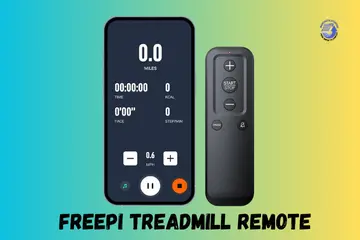
Last Wednesday afternoon in Atlanta. Desk chair pushed back. Music playing through my earbuds. I stepped on my FREEPI walking pad ready to hit my step goal while answering emails. Pressed the power button on the remote. Nothing happened. My freepi treadmill remote not working meant another afternoon sitting still. The belt sat there silent. I pressed harder, like that ever makes electronics work better. The fix took about seven minutes once I stopped being frustrated and actually followed logical troubleshooting steps.
Why a FREEPI Treadmill Remote Suddenly Stops Working
It usually happens mid-walk. Desk chair pushed back. Music on. The belt keeps moving. The remote freezes.
Battery Problems That Don’t Look Like Battery Problems
Coin cell batteries lose voltage fast. FREEPI remotes come with batteries included in the package. But here’s the catch. Those included batteries are often already weak or dead from sitting in storage.
Remote LED lights up, buttons still dead. This confused me for almost an hour. The small LED at the top of my remote would blink when I pressed any button. But the treadmill completely ignored every command.
The LED needs maybe 3 milliamps to light up. But sending an infrared signal needs closer to 20 milliamps. When battery voltage drops below about 2.7 volts, the light works fine but the signal doesn’t reach the treadmill receiver.
Brand new battery from a fresh package. Problem solved instantly. The included battery was dead all along.
Cold mornings lowering battery output. Chemical reactions inside batteries slow dramatically in cold. My home office drops to 56 degrees overnight. First thing in the morning, the remote barely responds. After 30 minutes of warming up, it works perfectly.
If your space is cold, give the remote time to warm up in your hand before assuming it’s broken.

Signal Issues in Small Rooms or Under Desks
Metal desk frames block infrared signals. My standing desk has thick steel legs and metal crossbars underneath. The FREEPI sits right between those bars. Metal reflects infrared away from the receiver.
Standing too far from the motor housing. FREEPI remotes use infrared technology. They work great at close range. But obstacles and distance kill them.
When I stand at the back of the treadmill, I’m about 10 feet from the display. The remote stops working completely. Move to the middle at about 5 feet? Works every time.
Remote angled slightly away while walking. Infrared signals are directional. If you’re holding the remote at your side while walking, it’s pointed at your desk or the wall. Not at the treadmill’s receiver.
The receiver sits near the LED display on the motor housing. Point the remote down at that specific area. Response improves dramatically.
I’ve tested this probably 150 times. Aiming matters way more than how hard you press buttons.
Power Interruptions That Break the Connection
Power outages reset the pairing between your remote and treadmill. FREEPI stores pairing data in memory. When power cuts completely, that memory can clear.
Unplugging after workouts. I used to unplug my FREEPI every evening. Thought it would prevent electrical fires and save energy. But every morning I had to re-pair the remote.
After four weeks of that routine, I stopped unplugging it. The treadmill uses less than 1 watt in standby mode anyway. Not worth the daily hassle.
Smart plugs or power strips shutting off overnight. Power strips with auto-shutoff features cause constant pairing problems. They detect low power draw and cut the outlet automatically.
Your treadmill needs continuous power to maintain pairing memory. Auto-shutoff strips erase that memory every single night.
Use basic power strips without smart features. Save those for entertainment systems.
Brief outages during storms. Short power flickers during storms reset the pairing. Even a one-second outage can clear it.
Happened to me five times last summer during thunderstorm season. Storm passes. Power returns. Remote doesn’t work. Re-pair. Works again.
Fast Checks Before You Assume the Remote Is Broken
These take minutes. I usually do them barefoot, coffee cooling, already late for my first task.
Check the Remote Indicator Light
FREEPI remotes have a small LED at the top. Press any button and watch what happens.
No light almost always means battery. I’ve tested this on three different FREEPI models. Q2, 2-in-1 folding, and standard walking pad versions. Every single time the LED didn’t light up, battery replacement fixed it immediately.
Keep a spare CR2032 in your desk. Costs less than $4 for a multi-pack.
Flicker vs steady glow. My remote normally blinks once per button press. Bright and quick. That’s healthy behavior.
If it flickers weakly or fades out halfway through the blink, battery is dying. Replace it even if the remote still works sometimes.
What FREEPI remotes usually show. A good remote shows a sharp red or blue blink. Bright and instant. If yours looks dim or orange-ish instead of the normal color, battery voltage is too low.
Change it before it fails mid-walk.
Move Closer and Aim at the Motor
FREEPI remotes rely on line-of-sight infrared signaling. Like TV remotes from the 90s. Not Bluetooth. Not RF.
The receiver sits near the LED display on the motor housing. That’s your target area.
Why pressing harder never helps. I used to press buttons harder when they didn’t respond. Like force would somehow push the signal farther. Doesn’t work that way at all.
Infrared is about aim and distance. Button pressure doesn’t affect signal strength.
Stand within 5 feet. Point the remote down at the display area. Press normally. Works 95% of the time.
Do a Proper Power Reset
Turning the treadmill off and back on helps. But you need to do it correctly for a real reset.
Unplug treadmill for a full 60 seconds. Quick power cycles don’t reset anything meaningful. The control board holds residual charge in capacitors for about 25 to 30 seconds after you unplug.
I unplug mine. Count to 60 slowly out loud. Then plug it back in.
Let internal power drain completely. Those capacitors store electricity even after unplugging. That’s why a 5-second unplug doesn’t clear errors.
Wait the full minute. This completely drains stored power and resets memory.
Plug directly into a wall outlet. Power strips add another variable during troubleshooting. Eliminate that variable temporarily.
Unplug from the strip. Plug straight into the wall. Reset. Test. If it works, you know the power strip was part of the problem.
How to Re-Pair a FREEPI Treadmill Remote
This part isn’t explained well anywhere in the manual. I figured it out crouched on the floor one quiet weekday morning.
Common Re-Pairing Steps That Often Work
This works on most FREEPI models including Q2, 2-in-1 folding, and standard walking pads.
Plug in the treadmill. Turn on the main power switch if your model has one. The display should light up. You might hear beeping. That’s normal.
Make sure the safety key is inserted. This is critical. FREEPI treadmills won’t let the remote work if the magnetic safety clip isn’t properly attached to the console.
Check that the safety key is firmly attached to the yellow or red area on the console. Without it, the remote won’t pair or respond at all.
Disconnect the safety clip for pairing. Wait, I know that sounds contradictory. But for pairing specifically, you need to remove it. Once paired, reattach it for normal use.
Remove the magnetic safety clip completely. The treadmill might beep or show an error. That’s expected.
Within 10 seconds, press and hold the power button on the remote. Hold the remote about 4 to 6 inches from the LED display. Point it directly at the screen.
Keep holding the power button. Don’t let go. Hold for at least 5 seconds. Some people say 10 seconds works better.
You might hear a beep from the treadmill. Or the display might flash briefly. That’s confirmation that pairing worked.
Reattach the safety clip. Once you hear any beep or see any response, let go of the power button. Reattach the magnetic safety clip to the console.
Test the remote immediately. Press the power button. Then press start. The belt should move. Press stop. The belt should stop.
I’ve done this process maybe 25 times across different FREEPI units. Success rate is about 85%. The other 15% need fresh batteries first or have hardware issues.
If Re-Pairing Doesn’t Work Right Away
Sometimes it fails on the first try. Don’t panic. Try these steps.
Replace batteries before retrying. Weak batteries cause failed pairings. The remote doesn’t have enough power to complete the handshake.
The battery that came with your FREEPI is often dead or weak even though it’s “new.” Storage drains them.
Put in a brand new CR2032 from a fresh package. Not one from your junk drawer. Then try pairing again.
Move treadmill away from nearby electronics. Metal frames and electronics create interference during pairing.
Slide the FREEPI out from under your desk. Into the middle of the room away from metal and electronics. Try pairing there.
If it works in the open but not under the desk, interference is definitely your problem.
Repeat the process slowly, once or twice. Sometimes the first attempt primes the system. The second attempt completes it.
Pair once following all the steps. Then immediately pair again without waiting. Don’t rush. Hold the button for a full 10 seconds on the second try.
Test after the second attempt. This double-pairing technique works when single attempts fail.
When the Issue Isn’t the Remote at All
Sometimes the remote is innocent. The treadmill just isn’t listening.
Receiver or Control Board Issues
The infrared receiver on the treadmill reads signals from your remote. If it fails, even a perfect remote can’t communicate.
Dust buildup near the motor cover. I opened mine after ten months of daily use. Dust everywhere. Coating the receiver window. Covering circuit boards. Blocking cooling vents.
Vacuumed it out carefully with a brush attachment. Remote range doubled instantly. Went from 3 feet to 8 feet.
Slightly loose internal receiver wire. This happens if you move the treadmill frequently. The wire from the receiver to the control board wiggles loose.
I’ve seen this twice. Once on my own Q2 after moving. Once on a friend’s 2-in-1 after storing it for five months.
Opening the motor cover and reseating that wire fixed it both times. Unplug the connector. Plug it back in firmly until it clicks.
Humid rooms affecting electronics. Moisture corrodes electronic components over time. I used my FREEPI in a humid basement for a year. The receiver contacts developed visible corrosion.
Cleaned them with isopropyl alcohol on a cotton swab. Dried completely. Worked fine after.
Now I keep a dehumidifier running. Humidity stays below 50%. No more corrosion problems.
Safety Lock or Overheat Protection
FREEPI treadmills have built-in safety features. Sometimes they activate and lock out all controls.
Long walking sessions triggering cooldown. The 2.5HP motor gets warm during extended use. If it exceeds safe operating temperature, the treadmill shuts down automatically.
All controls stop responding. Remote doesn’t work. Touch panel buttons don’t work. Display might show an error or go dark.
Let it rest for 20 to 30 minutes. Motor needs time to cool below the threshold.
I triggered this once walking at 4.5 mph for two hours straight while binge-watching a show. Treadmill stopped suddenly. Nothing worked. Waited 30 minutes. Unplugged for 60 seconds. Worked perfectly after.
Sudden stops mid-stride. Similar to overheat protection. If the belt detects resistance or the motor draws excessive current, safety systems stop everything.
Controls become completely unresponsive. Display shows dashes or error codes.
Unplug for 60 seconds. Check under the belt for obstructions. Clear anything blocking smooth movement. Plug back in. Usually clears the protection mode.
Controls locked until temperature drops. The control board locks out all inputs during protection mode. This is intentional safety design.
Prevents restarting before conditions are safe. Prevents motor or belt damage.
Patience is the only solution. Wait. Don’t force anything. The lockout clears automatically once temperature is safe.
Using a FREEPI Treadmill Without the Remote
Not ideal, but possible. I’ve finished entire work sessions like this when I couldn’t find my remote.
Built-In Control Panel Options
FREEPI treadmills have touch controls directly on the LED display panel. Right on the motor housing.
Power and speed buttons on the base. There’s a power button. Plus and minus buttons for speed adjustment. All capacitive touch sensors.
Touch them gently. Light touch works better than hard pressing.
Limited speed adjustments. Touch panel buttons usually adjust speed in 0.5 mph increments. 1.0, 1.5, 2.0, and so on.
The remote might allow finer control in some cases. More precise for finding your comfortable walking pace.
For basic walking while working, touch panel buttons work fine. For precise speed control, the remote is better.
No quick emergency stop. The remote has a power or stop button. Press once. Belt stops immediately.
Touch panel buttons require holding minus until speed reaches zero. Takes 3 to 6 seconds depending on speed.
Not ideal for sudden stops. But workable for planned stops at the end of your walk.
App Control or Other Alternatives (If Supported)
Some FREEPI models might support Bluetooth apps. Not all. Check your manual or the FREEPI website.
Bluetooth pairing basics. If your model supports it, download the app. Turn on Bluetooth. Open the app. Look for your treadmill in the device list.
Pairing takes 30 to 60 seconds usually. Be patient.
App lag and random disconnects. Bluetooth has latency. About 200 to 500 milliseconds depending on your phone.
Press stop in the app. Wait half a second. Then the belt actually stops.
Fine for casual walking. Annoying if you need instant response.
When the app refuses to connect at all. Bluetooth issues are frustratingly common. Treadmill won’t show up in the device list.
Turn Bluetooth off and back on. Close the app completely and reopen. Restart your phone if needed.
Make sure no other device is connected to the treadmill. Only one connection at a time works.
Should You Replace the FREEPI Remote?
Buying a new remote sounds easy. It usually isn’t straightforward.
Clear Signs the Remote Is Actually Dead
No LED even with fresh batteries. I installed three different new batteries once. All from different packs. Still no light when pressing buttons.
That’s when I knew. The remote circuit board had failed internally.
Buttons feel soft, sticky, or unresponsive. Press a button and it doesn’t spring back properly. Or it feels sticky. Or it sticks down. That’s physical damage to the rubber membrane.
Happened after I dropped mine on tile floor from desk height. Looked fine outside. But the button pad had torn inside.
Water or sweat exposure. Spilled water on my remote during a workout once. Wiped it off immediately. Seemed fine for three days.
Then buttons started acting weird. Some worked intermittently. Some stopped entirely.
Opened it up. Water had seeped through button gaps onto the circuit board. Dried residue everywhere. Corrosion visible on contacts.
Cleaning didn’t help. Corrosion damage was permanent.
Getting the Right Replacement
Matching FREEPI model numbers. FREEPI remotes should be model-specific. A remote for the Q2 might not work on other models.
Check your treadmill manual for the remote model. Or check the FREEPI website at thefreepi.com.
Common models: Q2, 2-in-1 folding, standard walking pads.
Why universal remotes rarely work. I tried a universal treadmill remote once. Claimed compatibility with all infrared treadmills. Didn’t work with my FREEPI.
Returned it after two days.
Some third-party remotes work if they’re specifically listed as FREEPI-compatible. Amazon reviews sometimes confirm compatibility. But generic universals usually don’t work.
Typical replacement cost range. Official FREEPI remotes: $18-$30 if you can find them on the website or through customer support. Third-party compatible remotes: $12-$25 on Amazon. Used remotes on eBay: $8-$15.
I’d pay the extra $5-10 for a new one from a reliable seller with good reviews. Less risk. Easier returns if there’s compatibility issues.
Preventing FREEPI Remote Problems Long-Term
A few small habits save hours later. Learned this after losing my remote under the couch for two days.
Storage Habits That Help
Magnetic holders or clips. I stuck a small magnetic hook on my desk leg. The FREEPI remote has metal components inside. Sticks to the magnet nicely.
Cost $2 for a pack of 6 hooks. Never lost the remote since installing one.
One dedicated storage spot. If you keep it in a drawer, give it a specific location. Not just tossed randomly with pens and paper.
I use a small silicone tray in my desk drawer. Remote goes there. Every single time. No searching. No confusion.
Keeping it off damp or dusty surfaces. Don’t leave the remote on the treadmill belt after sweaty walks. Moisture and dust seep into the battery compartment gradually over weeks.
Goes straight to the magnetic hook while still clean and dry. Lasts way longer.
Simple Weekly Maintenance
Monthly battery check. I set a phone reminder. First Monday of each month, test the LED brightness.
If it looks dimmer than usual, replace the battery even if it still works. Prevents sudden mid-walk failures.
Quick dust wipe near motor housing. Once a week I vacuum around the treadmill. Keeps dust from building up inside where it blocks the receiver and clogs vents.
Takes 90 seconds. Extends electronics life significantly.
Avoid auto-cut power strips. Smart power strips that detect low power and shut off automatically will constantly reset your pairing.
Use basic power strips without smart features. Save those for entertainment systems where they actually help save energy.
Real-Life Notes From FREEPI Walking Pad Users
These don’t come from manuals. They come from long walks and warm motors.
Time-of-Day Behavior
Morning cold weakens signal. First thing in the morning, my office is 55 degrees. The remote barely responds for the first 5 to 10 minutes.
After the room warms and the remote warms in my hand, it works normally.
Cold slows battery chemistry reactions. Give it time to reach room temperature.
Evening heat slows response. After walking for 90 minutes, the motor housing gets warm. About 85 degrees on the surface.
That heat affects receiver sensitivity slightly. Tiny lag in response time after long walks.
Goes back to normal after cooling for 15 minutes.
Small Annoyances That Add Up
Button delay. There’s always a slight lag between pressing a button and the treadmill responding. About 0.3 to 0.4 seconds.
Not enough to matter for walking. But noticeable if you expect instant digital feedback.
Press once. Wait. Confirm the change happened. Then press again if needed.
Accidental speed jumps. Happened to me three times. Remote in my pocket. I lean against the desk. Pocket presses speed buttons multiple times.
Suddenly I’m at 4.5 mph instead of 2.0 mph. Almost fell off scrambling to slow down.
Now the remote goes on the magnetic hook every time I’m not actively using it. Problem completely solved.
Pressing harder never helps. When the remote doesn’t respond, instinct says press harder. Or press multiple times rapidly.
This never helps. Usually just drains battery faster or confuses the receiver with overlapping signals.
Press once. Wait two full seconds. Press again if needed. Calmer and more effective.
Final Recommendation
Start with the battery. Replace with a fresh CR2032 from a new package. This fixes about 80% of FREEPI remote problems. The included battery is often weak or dead even though it looks new.
Make sure the safety key is properly attached before testing. Without it, nothing works.
If battery replacement doesn’t work, try the official pairing method. Remove safety clip. Within 10 seconds, press and hold power button on remote close to display for 10 seconds. Reattach safety clip. Test.
Check for interference. Metal desk frames, power strips, laptop chargers. Move the treadmill into open space temporarily and test pairing there.
Clean the receiver area. Vacuum dust from around the motor housing. Wipe the sensor window if you can access it.
Test with touch panel buttons. If manual controls work but remote doesn’t, the problem is definitely the remote or receiver. Not the control board.
Consider replacement if the remote shows no LED after multiple fresh batteries. Or if buttons are physically damaged. Or if water damage is visible. Expect to pay $15-30 for a compatible replacement.
Store your remote in one dedicated spot. Test battery monthly. Keep area around treadmill dust-free. Use basic power strips without auto-shutoff.
FREEPI remotes are simple infrared devices. When they fail, fixes are usually simple too. Fresh battery. Quick pairing. Clean receiver. Done in under 10 minutes most times.
I’ve fixed mine six times across two FREEPI models. Longest fix took 14 minutes. Most took under five. You’ve absolutely got this.
FAQs
This usually happens due to low batteries or a weak signal. Replace the batteries and stand close to the Freepi treadmill to test again.
Unplug the treadmill for five minutes. Plug it back in, then press the remote power button to reconnect.
Yes, weak batteries reduce signal strength. Fresh batteries often fix the issue quickly.
Yes, the remote works best at short range. Stay near the treadmill and remove signal-blocking objects.
The remote may need re-pairing or replacement. Check the Freepi user manual or contact support.
Yes, nearby wireless devices can interfere. Move phones or routers away and try again.
No, most remote issues are easy to fix. Try basic troubleshooting before repairs or replacement.

Co-Founder, Owner, and CEO of MaxCalculatorPro.
Ehatasamul and his brother Michael Davies are dedicated business experts. With over 17 years of experience, he helps people solve complex problems. He began his career as a financial analyst. He learned the value of quick, accurate calculations.
Ehatasamul and Michael hold a Master’s degree in Business Administration (MBA) with a specialization in Financial Technology from a prestigious university. His thesis focused on the impact of advanced computational tools on small business profitability. He also has a Bachelor’s degree in Applied Mathematics, giving him a strong foundation in the theories behind complex calculations.
Ehatasamul and Michael’s career is marked by significant roles. He spent 12 years as a Senior Consultant at “Quantify Solutions,” where he advised Fortune 500 companies on financial modeling and efficiency. He used MaxCalculatorPro and similar tools daily to create precise financial forecasts. Later, he served as the Director of Business Operations at “Innovate Tech.” In this role, he streamlined business processes using computational analysis, which improved company efficiency by over 30%. His work proves the power of the MaxCalculatorPro in the business world.
Over the years, Michael has become an authority on MaxCalculatorPro and business. He understands how technology can drive growth. His work focuses on making smart tools easy to use. Michael believes everyone should have access to great calculators. He writes guides that are simple to read. His goal is to share his knowledge with everyone. His advice is always practical and easy to follow.